
Speaking Services
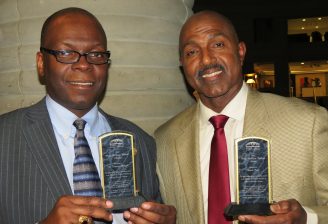
Dr. Terrance Dillard
& David L. Head
Award-Winning Speakers
Our presentations capture the inspirational saga of courageous pioneers who have paved the way. Through their works, we have a deeper understanding and appreciation of transportation.
Our Book
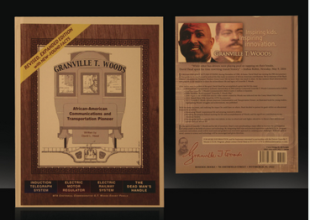
Granville T. Woods
African American Communication and Transportation Pioneer
This “Book on Tour” Exhibit, is now available. Contact us today to purchase copies for your school, library, bookstore, or Museum’s gift shop.
Meet the Founder

David L. Head
Founder, The David L. Head Foundation
"The time has come when we, the living dream of our enslaved, deprived ancestors, must take on responsibility for telling their incredible saga. It’s important- it’s vital - for our children so that they may have a much firmer and more confident sense of their own true potential..."
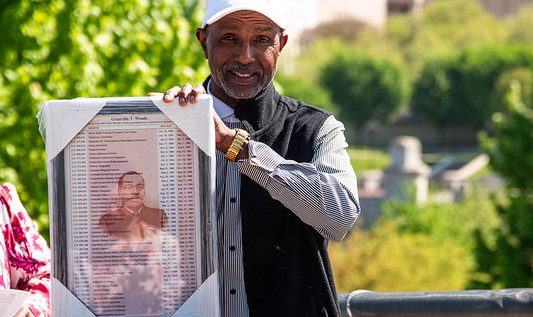
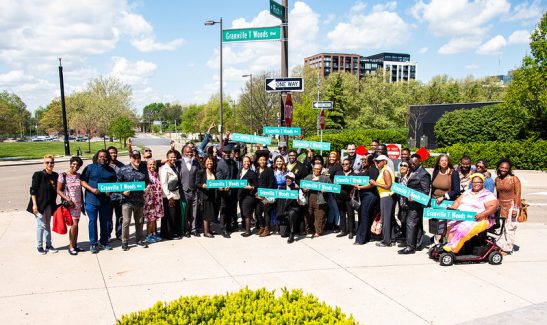
This year marks the 20th anniversary for the Foundation.
It brings a sense of joy and deep satisfaction. Especially when Butch & Sherri Hamilton invited me to be one of the keynote speakers. For the renaming of Granville T. Woods Blvd on his birthday April 23rd and birthplace Columbus, Ohio. Which is my " Flagship " project in 2026
Some key objectives moving forward:
- Reintroduce 4th edition Michigan Manual of Freemen`s Progress/Negroes in Michigan History
- Gather partners for Volume 2, 1915 - 2015 and beyond
- Book completion " The Black Genius behind Henry Ford "
- Continue to push and breakthrough for the Granville T. Woods big screen production or 8-12 part Netflix series
The DLH Foundation remains committed to taking on the responsibility of defining, interpreting, and claiming our rich golden legacy. I will continue to exhibit our Black History resources for all ages. Also lecture about untold-unsung Heroes locally throughout Detroit`s Metro areas and out of State programs.
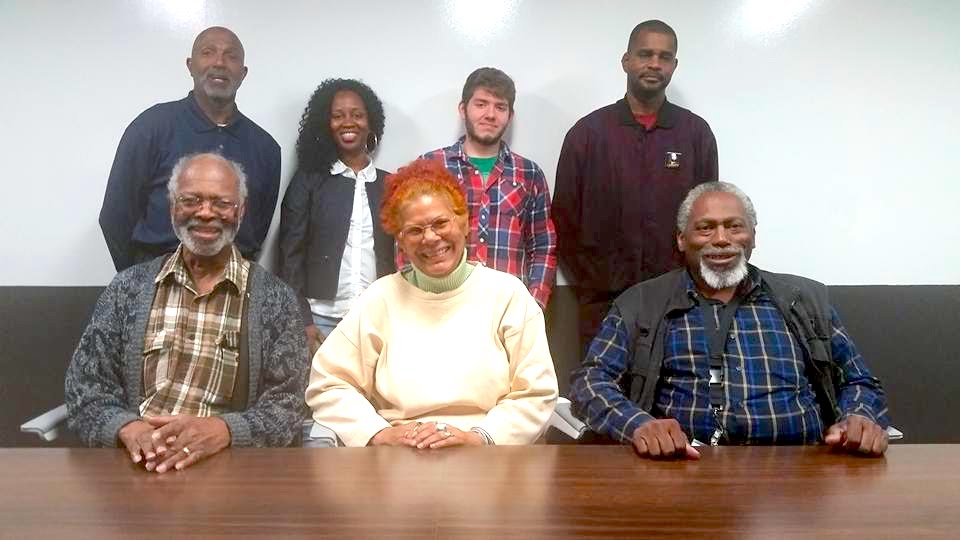
Tracking Advancement:
100 Years of Progress?
Preserving the People, Families and Institutions That Built Black Michigan
The Michigan Heritage Tracking Advancement Project brought together descendants, historians, genealogists, educators, researchers, Black churches, cultural institutions, and digital specialists to document more than a century of Black American advancement in Michigan.
Its signature initiative, Tracking Advancement: 100 Years of Progress?, began with the 1915 Michigan Manual of Freedmen’s Progress. This 371-page publication documented the educational, economic, political, religious, artistic, military, labor, property-owning, business, and social accomplishments of Black people throughout Michigan.
The Manual was prepared by a statewide commission of eight Black men and women appointed during the administration of Michigan Governor Woodbridge N. Ferris. It was presented at the 1915 Lincoln Jubilee and Half-Century Exposition in Chicago, held 50 years after the ratification of the 13th Amendment.
Representatives from 18 states, Puerto Rico, and other communities participated in the 25-day exposition. Among the states presenting written records of Black advancement, Michigan received top honors for its exhibit.
One hundred years later, the project returned to this important record to identify descendants, preserve family knowledge, collect oral testimony, examine Black migration, and document the continuing contributions of Black families, churches, businesses, educators, workers, military veterans, artists, and community institutions.
The Work of the Project
The project team researched the Black men and women appointed to Michigan’s original statewide commission and worked to locate their descendants. The research process drew upon:
- Family Bibles and oral traditions.
- Birth and death records.
- Census documents.
- Military and Civil War pension records.
- Obituaries and newspaper articles.
- Family photographs.
- Church records.
- Property and business records.
- Historical books and directories.
- Family correspondence and personal documents.
The project connected these records with the voices of living descendants. Families were invited to share what they knew about their ancestors, how family documents had been preserved, what stories had traveled across generations, and which parts of their ancestors’ legacies they intended to carry forward.
Through this process, the project created a direct connection between the public record of 1915 and the family lineages, institutions, and communities continuing that legacy more than a century later.
Project Outcomes
The collective work produced and advanced:
- Recorded oral testimonies from descendants.
- Public lectures and community conversations.
- Research into the eight members of the original statewide commission.
- Descendant-identification and family-lineage research.
- A digital exhibit based on the people, places, and themes recorded in the 1915 Manual.
- Historical mapping of where documented Black Michiganders lived and worked.
- A timeline tracing Black migration following the Civil War.
- Research into Black military service and Civil War records.
- Digital preservation of reports, interviews, photographs, and historical materials.
- Technology training for senior historians and community researchers.
- Public programs connecting family heritage with Michigan’s development.
- Digital systems through which descendants could contribute documents and family information.
The People Who Carried the Work Forward
David L. Head — Project Director
David L. Head directed the Michigan Heritage Tracking Advancement Project and served as chairperson of the Black Historic Sites Committee.
He brought together historians, descendants, genealogists, researchers, cultural institutions, and community partners around a shared commitment to preserving Black Michigan heritage. His leadership kept the work centered on the people documented in the 1915 Manual and the families, churches, and communities that continued their legacies.
Head coordinated the project’s research, public programming, partnerships, descendant outreach, and community participation. His leadership helped establish a collective structure through which Michigan’s Black heritage could be researched, preserved, interpreted, and shared.
Dr. Michelle S. Johnson — Project Advisor
Dr. Michelle S. Johnson provided historical and research guidance to the project. She emphasized the importance of identifying and researching the descendants of the original statewide commissioners.
She also conducted oral-testimony training for community historians. This training prepared participants to collect family memories respectfully, ask meaningful open-ended questions, preserve historical context, and recognize oral testimony as an essential part of the public record.
Dr. Denghulanga Julia Kapilango — Digital Coordinator
Dr. Denghulanga Julia Kapilango developed and managed the project’s digital and visual infrastructure.
She designed and developed the MHCHTAP website, created its online and downloadable descendant-submission forms, established digital document-sharing systems, and connected the website to the project’s public communications.
She also:
- Created the project’s logo and visual identity.
- Designed informational graphics, banners, and recruitment materials.
- Established the project’s Facebook, Twitter, and email presence.
- Supported livestreamed public programs and training sessions.
- Converted reports, evaluations, forms, and research materials into accessible digital formats.
- Converted the website into an Android mobile application.
- Supported the development of digital exhibits, historical mapping, and migration timelines.
- Recorded and presented an interview with cultural advocate John M. Green concerning his decades of work preserving the 1915 Manual.
Dr. Kapilango provided individual and group technology training for senior historians, genealogists, community researchers, and project leaders. The training included email communication, smartphones, Wi-Fi access, shared documents, databases, digital forms, software compatibility, online research, and video-recording equipment.
This work helped ensure that technology served the historians and descendants responsible for preserving the community’s knowledge.
John M. Green — Cultural Advocate, Historian and Descendant Coordinator
John M. Green devoted decades to protecting and promoting the information contained in the 1915 Michigan Manual of Freedmen’s Progress.
His republication of the Manual under the title Negroes in Michigan History preserved a vital record of Black Michigan life and helped make it available to researchers, families, historians, and the public.
Green contributed historical knowledge, supported descendant outreach, and helped establish the Manual as the project’s primary foundation for tracking Black advancement across generations.
LaNesha DeBardelaben — Museum and Community-Engagement Leader
LaNesha DeBardelaben contributed museum leadership, assessment, and community-engagement experience through the Charles H. Wright Museum of African American History.
The museum became an important gathering place for public programs, descendant participation, recorded interviews, historical presentations, and community dialogue.
Kathie House — Evaluator and Historian
Kathie House contributed as an evaluator, historian, and leader within the Detroit Branch of the Association for the Study of African American Life and History.
Her work supported program evaluation, historical interpretation, community participation, and the project’s connection to Detroit’s established network of Black heritage scholars and cultural advocates.
Jamon Jordan — Historian, Educator and Community Historian
Jamon Jordan contributed his knowledge as a historian, educator, community historian, and tour leader.
His participation helped connect the project’s documentary research with place-based public education about Black life, movement, institution building, and economic community development in Detroit and throughout Michigan.
Dr. Craig Wilkins — Advisory Architect
Dr. Craig Wilkins contributed architectural and planning knowledge to the project.
His perspective supported the examination of historic places and the connections among Black communities, neighborhoods, institutions, property ownership, architecture, and Michigan’s built environment.
Sharon E. Sexton — Documentarian and Community Historian
Sharon E. Sexton contributed documentary experience, community research, and public heritage knowledge.
Her experience included helping advance the Underground Railroad monument connecting Detroit and Windsor. Within the project, she participated in historical documentation, community research, digital training, and descendant-identification activities.
Dale Rich — Military Historian, Documentarian and Photojournalist
Dale Rich brought expertise in Black military history, photography, and documentary research.
He developed Searching for Ancestors by Using Civil War Era Military Records, an exhibit and public presentation hosted at the Main Branch of the Detroit Public Library. The exhibit used military records and the republished Michigan Manual to examine Black Civil War service and assist in locating descendants.
Evelyn Milstein — Historian, Author and Mapper
Evelyn Milstein contributed historical research, writing, and mapping experience.
Her work supported the project’s goal of identifying and mapping the Michigan locations where people named in the Manual lived, worked, worshiped, owned property, operated businesses, raised families, and contributed to community life.
Dr. Anita Moncrease — Medical Heritage Contributor
Dr. Anita Moncrease contributed historical medical context during the project’s public programming.
She discussed health conditions experienced by Civil War soldiers and Black civilians from Michigan’s early statehood period through 1915. Her contribution expanded the project’s consideration of family wellness, military service, community caregiving, and daily life.
Descendants Gave the Project Its Living Voice
Descendants were not treated simply as research subjects. They were essential contributors whose family knowledge connected historical documents with living memory.
Participating descendants included:
- Christine Napier, great-granddaughter of William Lambert, a foundational organizer and manager of Michigan’s Underground Railroad network. Lambert founded Detroit’s Colored Vigilant Committee and became a leading Black abolitionist who helped freedom seekers travel through Detroit to Canada.
- Meida Ollivierra, great-granddaughter of Warren C. Richardson, who became Detroit’s first Black police officer in 1895.
- Ruth E. Johnson, great-granddaughter of Lula Margaret Williams, one of the Black women whose life and contributions were connected to Michigan’s 1915 statewide record.
Their participation restored personal identity, family relationships, values, community service, and generational continuity to the public record.
The Role of Black Churches
Black churches were essential to the project’s descendant outreach and community-centered research.
The project recognized that Black churches have long preserved family histories, worship records, photographs, funeral programs, membership records, oral traditions, community relationships, and accounts of Black leadership that may not appear in public archives.
Among the churches connected to this larger heritage is Second Baptist Church of Detroit, Michigan’s oldest Black congregation. Founded in 1836, Second Baptist became a central institution in Detroit’s freedom movement and served as an important station in the Underground Railroad.
The church’s history is connected to Black abolitionists and community leaders, including William Lambert and George DeBaptiste. Its congregation helped freedom seekers traveling through Detroit toward Canada while also advancing education, civic participation, family life, spiritual leadership, and organized community protection.
Including Second Baptist Church of Detroit within the project’s heritage framework recognizes that Michigan’s Black churches were not merely places of worship. They were centers of:
- Spiritual sovereignty.
- Underground Railroad organizing.
- Family and community protection.
- Education and literacy.
- Leadership development.
- Mutual aid and caregiving.
- Civil and human rights advocacy.
- Business and economic relationships.
- Historical preservation.
- Intergenerational community building.
The project invited Black churches and community organizations to help identify descendants, recover family stories, preserve records, and expand the public understanding of Black life in Michigan.
Community and Institutional Partners
The project’s work was strengthened by collaboration involving:
- Michigan Humanities Council.
- Michigan Historical Center.
- Charles H. Wright Museum of African American History.
- Detroit Historical Society.
- Detroit Branch of the Association for the Study of African American Life and History.
- Wayne State University.
- Detroit Public Library.
- Second Baptist Church of Detroit and Michigan’s broader network of Black churches.
- Black families and descendants.
- Community historians and genealogists.
- Educators, researchers, and cultural advocates.
These relationships supported public education, research, oral testimony, historical exhibitions, descendant outreach, digital preservation, and community participation.
A Living Record of Black Michigan
Tracking Advancement: 100 Years of Progress? demonstrated that heritage tracking is not limited to examining the past. It identifies how family knowledge, faith, land ownership, entrepreneurship, skilled work, education, public leadership, military service, cultural expression, caregiving, and community institutions continue across generations.
The project honored the people whose accomplishments were documented in 1915, the historians who protected the record, the descendants who shared their families’ stories, the Black churches that preserved community memory, and the researchers who expanded Michigan’s understanding of Black American life.
Through their collective work, a century-old publication became a living record of Black family continuity, spiritual leadership, economic community development, cultural stewardship, and civilization building.
News / Press / Awards
Read about our latest success
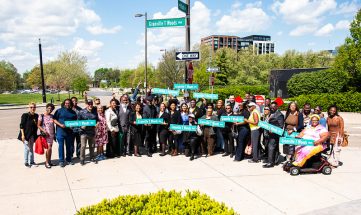
Granville T. Woods Blvd street renaming
Columbus, Ohio 2026
"This year marks the 20th anniversary for the David L. Head Foundation. It brings a sense of joy and deep satisfaction, when Butch & Sherri Hamilton invited me to be one of the keynote speakers." The new street name was dedicated on April 23, 2026, marking the 175th anniversary of his birth.
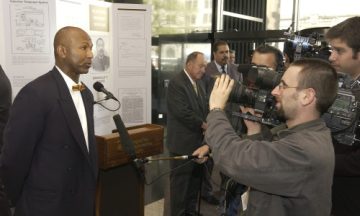
MTA Centennial Celebration
Subway Centennial GTW Commemorative Exhibit | 2004
Granville T Woods was honored by MTA Chairman Peter S Kalikow and MTA NYC Transit President Lawrence G. Reuter, as a display and exhibit celebrating his inventive genius was unveiled at the MTA’s 2 Broadway building in Lower Manhattan.
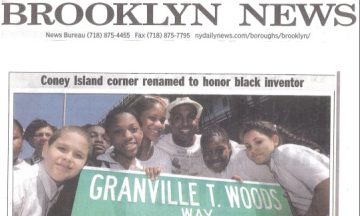
Granville T. Woods Street naming
The naming of Granville T. Woods Way | April 17th 2008
April 17, 2008 the renaming of Stillwell Avenue and Mermaid Avenue by the Council of The City of New York took place. The unveiling was held in Brooklyn, New York.
Our Gift Shop
Purchase African-American Art, Gifts Educational Aides, and Collectibles, before they're gone!
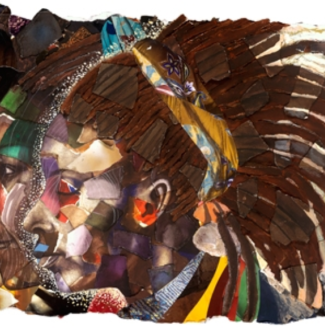
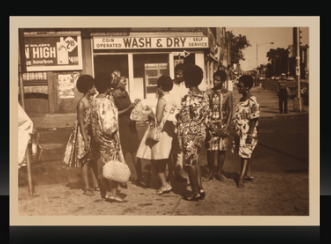
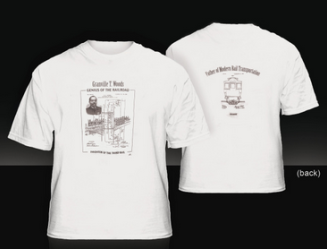
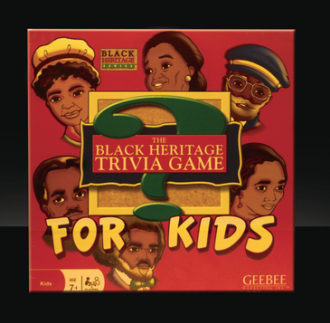
Our shop offers a thoughtful selection of items for all ages. We have an assortment of collectible art, T-shirts, caps, games, books, calendars, puzzles, and more. Shop with us today!
Our flagship Granville T. Woods Project
This project is a unique production that skillfully highlight the principal contributions of an African American inventor whose life exemplifies hard work, persistence, commitment, and dedication to his goals. The Subway Centennial exhibit provides insight into how Mr. Woods used his electrical genius to improve the quality of life for a nation and a society.
Mr. Woods legacy is an encouraging message especially to youth, and this exhibit is valuable in its historical perspective.